
The plant: eucalyptus
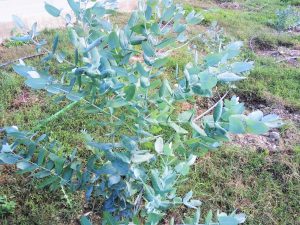 Eucalyptus Blue Gum is regarded as a rapidly growing tree in most countries where it is used. Both from scientific research and from our recorded database in the field, eucalyptus trees can accomplish a significant rate of growth, given the appropriate conditions during seedling’s preparation and climate features in the field.
Development and Performance
We know without evidence for natural stands in Australia, some in Tasmania, Victoria and the Australian Capital Territory (ACT), that they have performed well. In Tasmania performance of Globulus subspecies was 35 m³ / ha per year, within 17 years and it was recorded that the taller trees have an average height of 30 meters. The plantation of the ssp. Globulus type in Victoria reached on average 20.32 cm in DBH (Diameter at Breast Height = diameter at breast height) and 18 meters high in 14 years, while another species, ssp. Bicostata, in Canberra – the Australian Capital Territory – at the age of 13 years and a somewhat lower stock, reached an average of 21 cm in DBH and 15.5 meters in height.
These data are very close to those reported for other countries. The annual growth rate in northwestern Spain are on average 20 m³ / ha, but in southwestern Spain is only 5 – 6 m³ / ha. In Uruguay the 25 m³ / hectare average annual growth considered satisfactory. In Ethiopia and Portugal at the 10th age in the highest quality location, a very good growth is considered to be 20 m³ / ha per year.
Root system
Eucalyptus Blue Gum produces roots throughout the range of the ground. Its roots reach deep enough, if it is allowed by the ground, otherwise stands at a shallow level. In shallow soils, when in subsurface is allowed a deeper rooting, it is observed that growth is significantly improved. Most of trees have their roots below the end of the shank, but sometimes randomly, the roots appeared from the stem. The tree is resistant to wind once reaches at a sapling size, but because the root system develops slowly, it can be carried away by the wind when it is still a seedling.
Harvest Periods
The exploitation of eucalyptus plantations should be conducted in the spring. Sprouts that appear about 2 months after cutting it is important to avoid exposure of young shoots in the conditions of autumn and winter. Therefore are selected to be harvested between the months of February – May so as to reduce the number of dead shoots on arrival of cold. The work during the spring also improves the survival of strains, durability and significantly reduces the number of dead shoots.